Why Does Birth = Pain Feel Like an Unquestionable Truth?

Cactus symbolising a pain trigger as well as resilience.
When I first became pregnant, I wasn't just afraid of birth. I was convinced it was something that simply had to be survived.
I'd grown up hearing stories that followed the same script. Traumatic medical interventions culminating in emergency caesareans.
"It all moved so fast, I don't really know what happened."
"I just did what they told me."
Friends and colleagues continued to describe birth as something that happened to women, not something they owned and led. "You'll forget how awful it was once you hold your baby."
On top of that, I'd lived in the UK for over ten years without ever really needing hospital care. The thought of giving birth in one felt completely overwhelming.
Looking back, I realise I wasn't entering pregnancy with an open mind. I was carrying years of other people's experiences alongside me.
We don't start with a blank slate
Long before we're pregnant, we've already attended hundreds of "lessons" about birth. We absorb dramatic television scenes, hear family birth stories and pick up the language people use around labour. Even without realising it, our brains begin building expectations. [1]
Just like following that familiar path on your walk home, with a positive pregnancy test comes an easy route for our brain to follow:
Birth → danger → pain → panic.
The theory of Hebbian Learning tries to explain the process behind this as neuroscientist Donald Hebb famously coined the phrase, "Neurons that fire together wire together." [2]
This is how I see it: every time we repeat a thought, it’s like we’re walking through a field of long grass and treading the same route. It gets easier with each go around and eventually it feels like it's the only path, even if it’s taking us through the roughest, uphill part of that field.
This is because repetition is a powerful tool and we’re often not using it to our advantage, especially when it comes to preparing for birth.
Why logic isn't enough

It’s helpful to picture the mind as an iceberg. Above the surface are our conscious thoughts, the ones we're aware of and can deliberately choose. Beneath the surface sits everything that has quietly shaped us over the years: our habits, assumptions, memories and deeply ingrained beliefs. We may not think about them often, but they're still there, influencing how we respond, especially in moments of stress.
Years of studying Psychology taught me plenty about how our minds work. I'd just never stopped to think about what mine might be doing during labour. I assumed that for such a significant life event, my rational mind would be leading the show. And that’s exactly how all those old beliefs go undetected for so many of us, hiding behind the very logical and sensible statements we tell ourselves.
“It can’t be that bad.”
"I'll cross that bridge when I come to it."
But beneath the armour of carefully chosen beliefs, there were years of stories, films, conversations and family experiences that actually made my mind swirl with common fears:
“Can I actually die?”
“Strangers will be doing things to my body and I won't get a say”
Whether we want it to or not, our expectations can influence how we experience pain, and it's a cycle that's easy to get pulled into. [3]
After years of hearing that birth is something to fear, I enter labour already expecting it to be painful and overwhelming. My body responds by becoming tense and guarded. But a tense body has to work harder than a relaxed one; muscles use more energy, become fatigued more quickly and can create additional discomfort.
Then a contraction arrives, and if my mind interprets that sensation as danger, fear increases, my body tightens further and the cycle continues.
This is the Fear–Tension–Pain Cycle. [4]
Except…
I have gone for long runs that might have been rough while doing them but felt amazing at the end. Hikes that put strain on my body but filled my lungs with peace once I reached the top.
Discomfort that I welcomed because I knew my body was perfectly capable of withstanding it and would feel empowered by the end.
Labour asks our bodies to work incredibly hard, just like a marathon or a hike. The difference is that many of us have spent years believing those sensations are something to fear, rather than something purposeful.
Your brain isn't trying to sabotage you. It's trying to protect you. If it believes birth equals danger, it prepares your body for danger. That's actually an incredible survival system...
….it's just not always helpful during labour.
So where does hypnosis fit?

The answer was there all along; we were just looking at it from the wrong angle.
If the years of repeated negative stories about birth can be so powerful, so can repetition of positive and more accurate messages when practised with an open mind.
Hypnosis gives your brain the chance to lower its guard and rehearse a different story. Treading a new path through that field of long grass, but this time through the flower-filled meadow.
Every relaxation practice.
Every positive birth story.
Every breathing exercise, visualisation and evidence-based discussion.
You're gradually treading a new way home.
Eventually it becomes the easier path. The safe path.
For me, it was the daily yoga practice that I would end imagining a positive birth at the sound of the labour playlist I had carefully put together. Each song brought back a cherished memory. My body felt good in that moment and I sat with that feeling, in connection with my baby while becoming familiar with the possibility of a calm, positive birth.
“My body and my baby are healthy and strong”
But isn't labour still painful?
Pain is a very broad term that doesn't automatically equal suffering. And you won’t find any research to show that preparation or confidence guarantee a pain-free labour in every person. However, what research consistently shows is that preparation can:
reduce fear and anxiety
improve pain coping
reduce the likelihood that pain will be experienced as overwhelming or traumatic [5]
The value in growing a woman’s confidence in being able to handle childbirth is not just her “feeling positive” about it. It can directly impact emotional wellbeing, coping behaviours and feelings of satisfaction. [6]
From my own personal perspective, I started my pregnancy thankful that I had 9 months to quietly dread the deal, and got to the day my labour started excited to be witnessing every incredible stage my body was about to go through. That's the kind of transformation thoughtful birth preparation can make possible.
Did I sneeze my baby out? No. Did I feel like a rockstar when I pulled him up from the birthing pool? Absolutely.
Investing in birth preparation
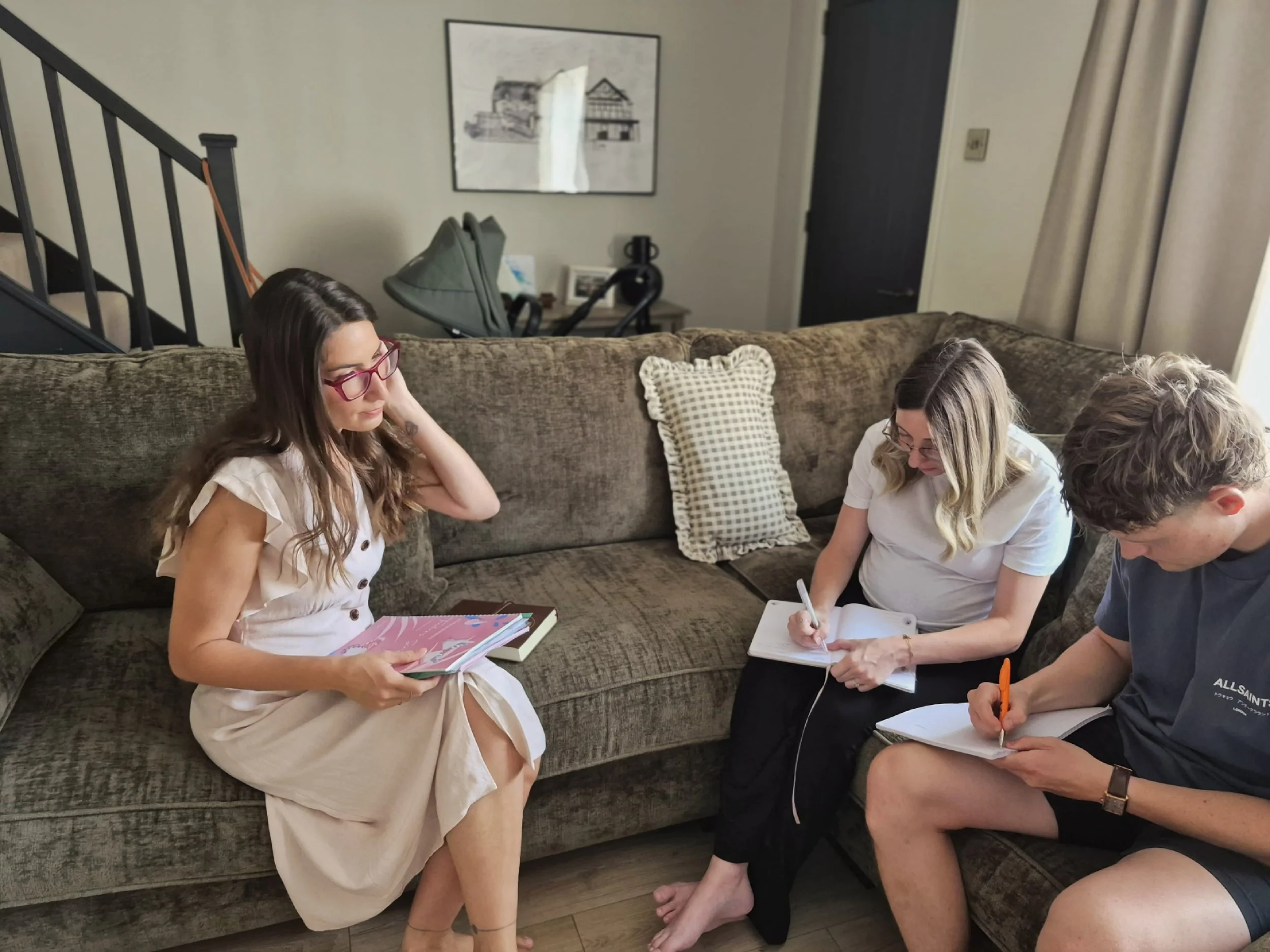
By now, you can probably see that preparing for birth isn't about trying to eliminate pain or convincing yourself that labour will be easy. It's about understanding how your mind and body work together, then giving yourself the tools to respond with confidence instead of fear.
Think about it like training for a marathon. You wouldn't expect to feel ready after watching a few videos online. You'd follow a plan, practise consistently and, if you could, work with a coach who knows how to help you prepare.
Birth deserves the same level of investment.
The internet is full of information, but information alone rarely builds confidence. In fact, it often leaves parents-to-be feeling overwhelmed by conflicting advice and worst-case scenarios.
That's why, at The Quiet Tide, hypnobirthing is so much more than learning breathing techniques. It's about uncovering the beliefs that may be holding you back, replacing fear with understanding, and practising evidence-based tools until they become second nature. Think of me as your personal trainer for birth - guiding you, keeping you accountable and helping you build the confidence to meet labour on your own terms.
Something wonderful often happens along the way. Instead of counting down to birth with dread, many parents find themselves feeling curious, excited and genuinely looking forward to the experience of meeting their baby. Not because they expect birth to be pain-free, but because they trust themselves to navigate it.
The stories we've inherited don't have to become the stories we pass on. With the right preparation, birth can become the beginning of a different conversation - one built on confidence, capability and the quiet belief that you can do this.
Ready to prepare for birth with more confidence and less fear?
